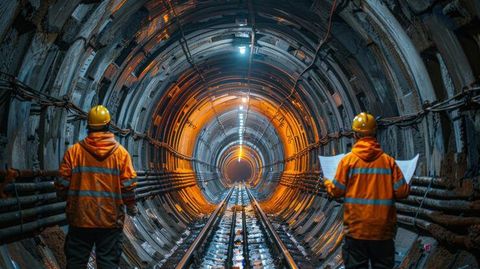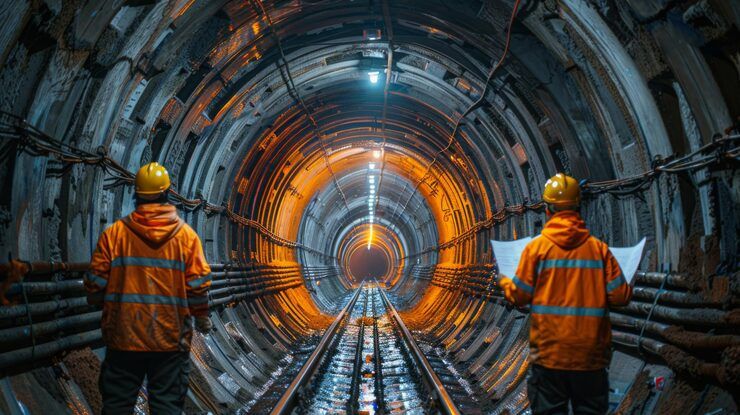
Tunnel Boring Machines (TBMs) are specialized machines used to excavate tunnels through soil, rock, and other underground materials. They are designed to create tunnels for transportation systems, utilities, and infrastructure projects while minimizing surface disruption. TBMs have evolved from simple drilling devices into highly advanced machines capable of handling complex geological conditions.
The use of tunnel boring machines emerged from the need to construct underground passages efficiently and safely, particularly in urban environments where traditional excavation methods could be disruptive. These machines allow for continuous excavation while simultaneously supporting tunnel walls, which improves safety and stability.
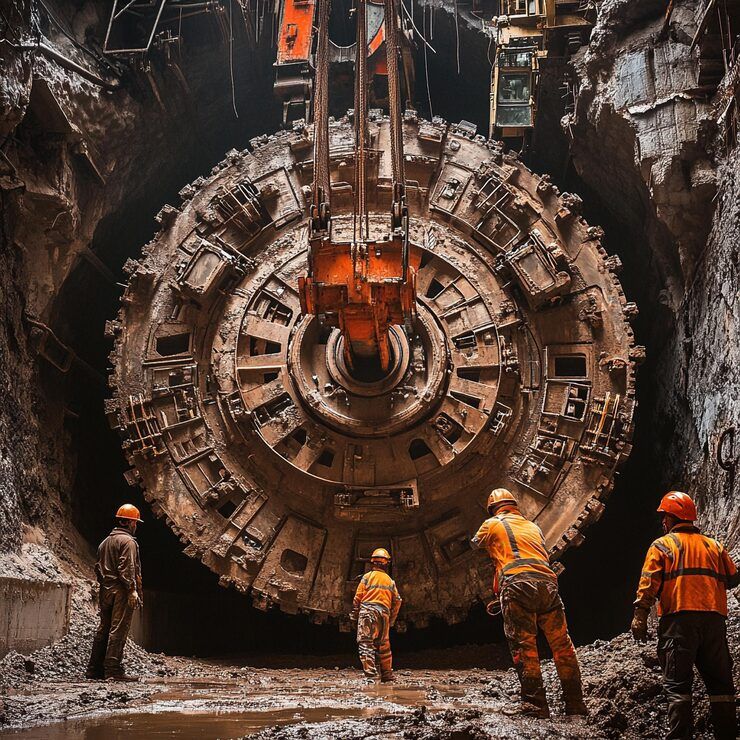
TBMs exist to address the challenges of underground construction, such as controlling ground settlement, managing water inflow, and maintaining consistent tunnel alignment. They have become an essential part of modern civil engineering projects worldwide.
Importance
Tunnel Boring Machines are important because they improve safety, efficiency, and precision in underground construction. For urban areas, TBMs reduce the risk of surface collapse and minimize disruption to buildings, roads, and public spaces.
For large-scale infrastructure projects such as subway systems, water tunnels, and utility corridors, TBMs provide consistent progress while handling challenging geological conditions. They help engineers manage risks associated with varying soil types, rock hardness, and underground water.
Additionally, TBMs contribute to long-term cost efficiency by reducing construction delays and improving project timelines. Their ability to install support structures simultaneously ensures that tunnels remain stable throughout the excavation process.
Recent Updates
Recent developments in tunnel boring machines between 2024 and 2026 have focused on automation, monitoring, and environmental impact. Modern TBMs incorporate sensors and digital control systems that allow operators to track excavation progress in real time and adjust operations to maintain safety.
Another trend is the development of machines capable of handling mixed ground conditions, such as transitions from soft soil to hard rock, without slowing down the project. Enhanced cutter heads and segmented tunnel lining systems allow TBMs to maintain continuous operation in complex geological scenarios.
Sustainability has also influenced TBM design. Machines are being optimized for reduced energy consumption, dust control, and minimal disturbance to groundwater. This reflects a broader trend toward environmentally responsible construction practices.
Types of Tunnel Boring Machines
| TBM Type | Description | Typical Use |
|---|---|---|
| Earth Pressure Balance (EPB) | Maintains pressure to stabilize soft soil | Urban metro tunnels |
| Slurry Shield TBM | Uses slurry to support tunnel face | Water-bearing or loose soil |
| Hard Rock TBM | Equipped with disc cutters for rock excavation | Mountain or rock tunnels |
| Mixshield TBM | Handles variable ground conditions | Complex mixed soil and rock areas |
Laws or Policies
Tunnel boring machines are subject to regulations related to construction safety, environmental protection, and urban planning. In India, construction projects using TBMs must comply with building codes, safety standards, and environmental impact assessments.
Regulatory guidelines ensure that tunneling projects minimize risks such as ground subsidence, water contamination, and noise pollution. Operators must maintain proper documentation for soil testing, excavation procedures, and machine maintenance.
Government infrastructure initiatives often provide frameworks for large-scale tunneling projects, including metro and railway systems. These programs guide the use of TBMs while emphasizing safety, sustainability, and accountability.
Tools and Resources
Several tools and platforms assist engineers and project managers in planning and executing TBM projects:
Geotechnical Analysis Software
These tools help assess soil and rock conditions, allowing engineers to select the appropriate TBM type and predict excavation challenges.
Monitoring Systems
Digital monitoring tools track TBM performance, cutter wear, ground pressure, and tunnel alignment in real time. This data helps optimize operations and prevent delays.
Tunnel Design Templates
Predefined design templates for tunnel lining, segment installation, and support systems streamline planning and ensure consistency across projects.
Online Knowledge Platforms
Engineering forums, research publications, and construction networks provide access to case studies, technical specifications, and best practices for TBM projects.
Simulation Tools
Virtual simulations of tunnel excavation allow teams to model potential issues, such as water inflow, ground settlement, or equipment malfunction, before actual excavation begins.
FAQs
What are tunnel boring machines?
Tunnel Boring Machines are large, specialized machines used to excavate tunnels through soil, rock, or other underground materials while supporting the tunnel walls during construction.
How do tunnel boring machines improve safety?
TBMs maintain ground stability, prevent collapse, and reduce surface disruption. They also install support segments as excavation progresses, enhancing tunnel safety.
What types of tunnel boring machines exist?
Common types include Earth Pressure Balance (EPB) TBMs for soft soil, Slurry Shield TBMs for water-bearing ground, Hard Rock TBMs for rock tunnels, and Mixshield TBMs for mixed ground conditions.
Are tunnel boring machines used only in urban areas?
No, TBMs are used in urban and rural environments. They are suitable for metro systems, railway tunnels, water conveyance, and infrastructure projects in varied geological conditions.
How are tunnel boring machines monitored?
Modern TBMs are equipped with sensors and digital monitoring systems that track excavation progress, machine performance, ground pressure, and alignment to optimize construction and safety.
Conclusion
Tunnel Boring Machines play a critical role in modern underground construction by combining excavation, stabilization, and support into a single continuous process. They improve efficiency, reduce surface disruption, and adapt to complex geological conditions. Recent advancements in automation, monitoring, and sustainability have enhanced their effectiveness, making them a key technology for infrastructure development. Understanding TBMs provides insight into how large-scale tunnels are constructed safely and efficiently.