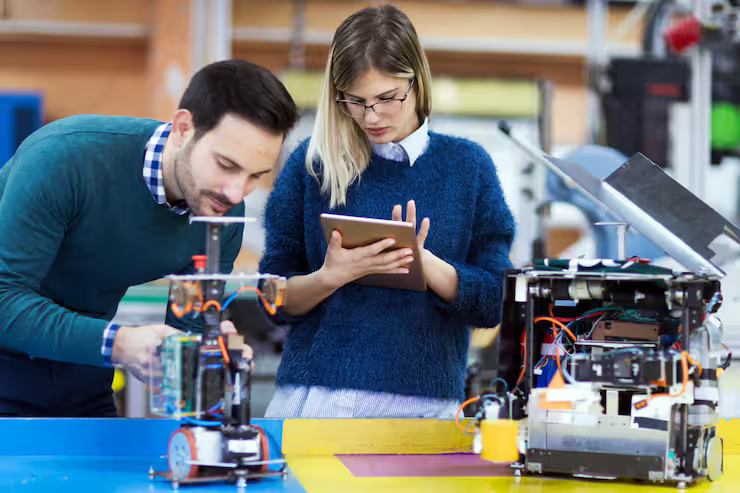
Robotics is a multidisciplinary field that combines engineering, computer science, and artificial intelligence to design, build, and operate machines capable of performing tasks automatically or semi-automatically. These machines, known as robots, are developed to assist humans in tasks that may be repetitive, complex, or hazardous.
The concept of robotics exists to improve efficiency and accuracy in various environments. From manufacturing industries to healthcare systems, robots are used to handle operations that require precision and consistency. Over time, robotics has evolved from simple mechanical devices to intelligent systems capable of learning and adapting through advanced algorithms.
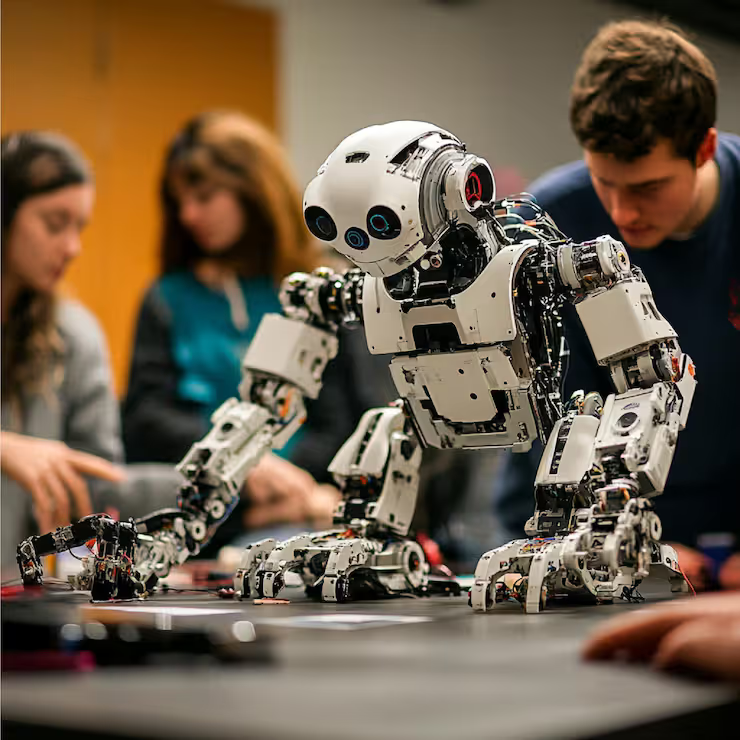
Modern robotics integrates several core components such as sensors, actuators, controllers, and software systems. These components work together to enable robots to perceive their surroundings, make decisions, and perform actions. As technology advances, robotics continues to expand into everyday life, influencing how people interact with machines and automated systems.
Importance
Robotics plays a critical role in today’s technology-driven world. Its importance is evident across industries, where automation and intelligent systems are becoming essential for efficiency and innovation.
This topic is relevant because:
- Industries rely on robotics for automation and precision
- Healthcare uses robotic systems for advanced procedures
- Logistics and supply chains benefit from automated handling systems
- Education incorporates robotics to teach problem-solving and technical skills
Robotics addresses several challenges:
- Repetitive tasks: Robots handle routine operations with consistency
- Safety concerns: Machines perform tasks in hazardous environments
- Accuracy requirements: Robotics ensures high precision in complex processes
- Scalability: Automated systems allow operations to expand efficiently
Key Benefits of Robotics
| Feature | Benefit |
|---|---|
| Automation | Reduces manual effort and improves efficiency |
| Precision | Ensures accurate and consistent performance |
| Safety | Minimizes human exposure to risks |
| Productivity | Increases output in industrial processes |
| Innovation | Supports development of advanced technologies |
Robotics also contributes to the development of smart systems, enabling industries to adapt to changing technological demands and improve overall performance.
Recent Updates
The field of robotics has experienced rapid advancements in the past year, driven by developments in artificial intelligence and automation technologies.
- 2025: Increased use of AI-powered robots in manufacturing for adaptive production processes
- 2025: Expansion of collaborative robots (cobots) designed to work alongside humans safely
- Late 2024 – Early 2025: Growth in robotics applications in healthcare, including robotic-assisted procedures and rehabilitation systems
- 2025: Integration of robotics with Internet of Things (IoT) for real-time monitoring and control
- 2025: Development of autonomous mobile robots for logistics and warehouse operations
Another significant trend is the use of machine learning algorithms that allow robots to improve their performance over time. These systems can analyze data, learn from experience, and adapt to new environments.
Robotics is also becoming more accessible in education, with simplified platforms and kits designed for beginners to learn programming and mechanical design concepts.
Laws or Policies
Robotics is influenced by various laws and policies that ensure safety, ethical use, and responsible deployment of automated systems. In India, regulatory frameworks address both technology development and workplace safety.
Key Regulations Affecting Robotics
- Information Technology Act: Covers digital systems, cybersecurity, and data protection
- Digital Personal Data Protection Act (DPDP), 2023: Ensures responsible handling of data collected by robotic systems
- Industrial Safety Standards: Govern the use of machinery and automated equipment in workplaces
- Bureau of Indian Standards (BIS): Provides guidelines for manufacturing and safety compliance
Compliance Considerations
- Robots must meet safety and operational standards
- Data collected by robotic systems should be protected
- Systems must be tested for reliability and risk management
- Ethical considerations must be addressed in AI-driven robotics
These regulations help create a structured environment where robotics can develop while ensuring safety and accountability.
Tools and Resources
Learning robotics requires access to the right tools and resources that support both theoretical understanding and practical application.
Common Robotics Tools
- Programming environments for coding robot behavior
- Simulation software for testing robotic systems
- Microcontroller platforms for hardware control
- Sensor kits for environment detection
- Data analysis tools for performance monitoring
Key Features to Explore
- Real-time system control
- Integration with AI and machine learning
- Visualization of robotic movements
- Multi-device compatibility
- Customizable development environments
Basic Robotics Learning Workflow
| Step | Action |
|---|---|
| Concept Learning | Understand basic principles of robotics |
| Component Study | Learn about sensors, actuators, and controllers |
| Programming | Write code to control robot behavior |
| Simulation | Test models in virtual environments |
| Implementation | Build and operate physical systems |
Additional Resources
- Educational platforms offering robotics tutorials
- Online communities for knowledge sharing
- Documentation for robotics frameworks
- Case studies on real-world robotic applications
These resources help beginners gradually build skills and understand how robotics systems function in practical scenarios.
FAQs
What is robotics in simple terms?
Robotics is the study and development of machines that can perform tasks automatically. It combines engineering and programming to create systems that can operate with minimal human intervention.
What are the main components of a robot?
A robot typically includes sensors, actuators, controllers, and software. Sensors collect data, actuators perform actions, and controllers process information to guide operations.
How is robotics used in everyday life?
Robotics is used in various areas such as manufacturing, healthcare, logistics, and home automation. Examples include automated machines, robotic assistants, and smart devices.
Is robotics difficult for beginners?
Robotics can be complex, but beginners can start with basic concepts and simple tools. Many learning resources are designed to make the process easier and more accessible.
What skills are needed to learn robotics?
Key skills include basic programming, understanding of electronics, problem-solving, and logical thinking. Knowledge of mathematics and engineering concepts is also helpful.
Conclusion
Robotics is a dynamic and evolving field that plays a vital role in modern technology. By combining mechanical systems, electronics, and intelligent software, robotics enables machines to perform tasks efficiently and accurately.
The importance of robotics continues to grow as industries adopt automation and intelligent systems to improve productivity and safety. Recent advancements highlight the integration of AI, IoT, and machine learning, making robotics more capable and adaptable.
Understanding laws and policies ensures responsible use of robotics, while available tools and resources provide a pathway for beginners to learn and explore this field. With structured learning and practical application, robotics can be approached in a clear and manageable way.
As technology progresses, robotics will continue to shape industries and everyday life, offering new opportunities for innovation and problem-solving.