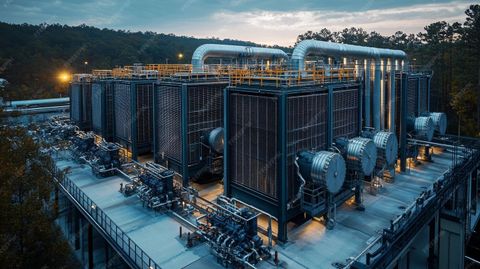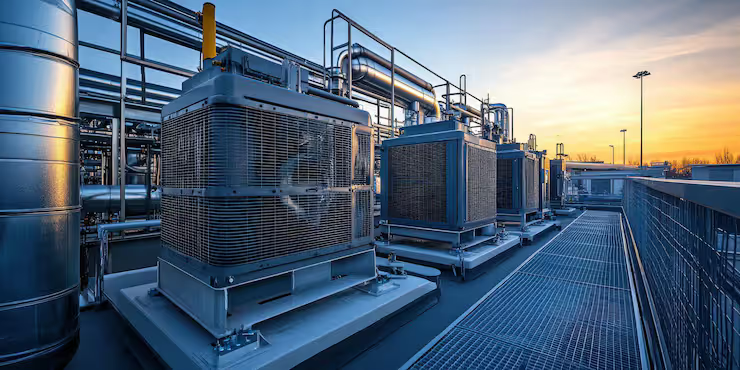
Industrial chillers are cooling systems used to remove heat from processes, equipment, or spaces in industrial and commercial environments. These systems are widely used in manufacturing plants, data centers, food processing units, and HVAC applications where temperature control is critical.
The need for industrial chillers arises because many industrial processes generate heat that can affect equipment performance and product quality. Chillers help maintain stable temperatures, ensuring efficient operations and preventing overheating.
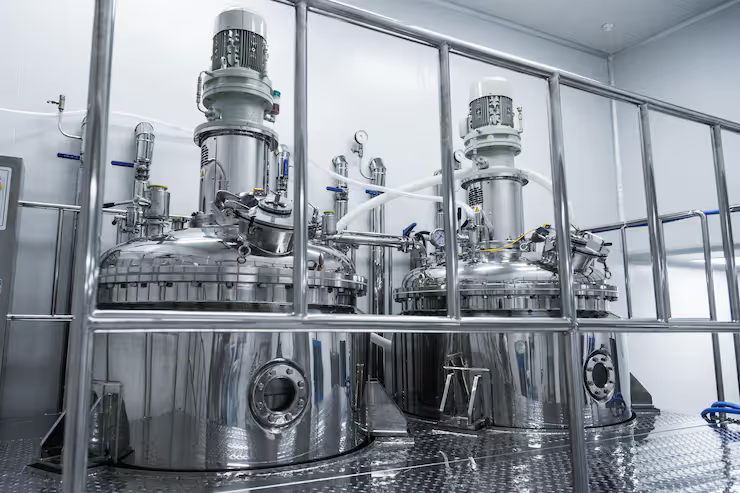
An industrial chiller system typically includes:
- Compressor for circulating refrigerant
- Condenser for releasing heat
- Evaporator for absorbing heat
- Expansion valve for controlling refrigerant flow
Chillers operate on refrigeration principles, transferring heat from one area to another using a cooling medium. Training programs are designed to help learners understand system components, operational procedures, and maintenance practices.
Importance
Industrial chiller training is important because proper operation and maintenance directly impact efficiency, safety, and equipment lifespan. Skilled handling ensures consistent cooling performance and reduces the risk of system failures.
This topic is relevant for:
- Technicians and operators managing cooling systems
- Engineering students studying thermal systems
- Facility managers overseeing industrial operations
- Maintenance teams responsible for equipment reliability
Key benefits of training include:
- Improved understanding of cooling system operations
- Reduced energy consumption through optimized performance
- Early detection of faults and preventive maintenance
- Enhanced safety when handling refrigerants and equipment
The comparison below highlights trained vs untrained chiller operations:
| Aspect | Without Training | With Training |
|---|---|---|
| System Efficiency | Inconsistent | Optimized |
| Fault Detection | Delayed | Early identification |
| Energy Usage | Higher | Controlled |
| Maintenance Practices | Reactive | Preventive |
| Equipment Lifespan | Shorter | Extended |
Training ensures that chillers operate efficiently while maintaining safety and reliability.
Recent Updates
In 2025, industrial chiller technology has advanced with a focus on sustainability, automation, and smart monitoring.
Key developments include:
- Energy-efficient chillers: Improved designs that reduce power consumption
- Smart monitoring systems: Real-time tracking of temperature, pressure, and performance
- IoT integration: Remote monitoring and predictive maintenance capabilities
- Use of eco-friendly refrigerants: Reduced environmental impact compared to traditional refrigerants
- Automation and control systems: Enhanced precision in temperature management
These advancements reflect the growing demand for efficient and environmentally responsible cooling solutions.
Laws or Policies
Industrial chiller operations are regulated to ensure environmental safety, energy efficiency, and workplace protection.
In India:
- The Environment Protection Act regulates emissions and refrigerant usage
- The Energy Conservation Act promotes efficient energy use in industrial systems
- Bureau of Indian Standards (BIS) provides guidelines for equipment quality and performance
Key regulatory considerations include:
- Safe handling and disposal of refrigerants
- Compliance with energy efficiency standards
- Regular inspection and maintenance of equipment
- Adherence to workplace safety protocols
Globally, standards such as ISO and environmental agreements guide the use of refrigerants and cooling technologies.
Tools and Resources
Various tools and resources support industrial chiller training and operations:
-
System monitoring software
Tracks temperature, pressure, and system performance -
Thermal analysis tools
Help understand heat transfer and cooling efficiency -
Maintenance tracking systems
Schedule servicing and inspections -
Technical manuals and guides
Provide instructions for installation and operation -
Simulation software
Offer virtual training for understanding system behavior
The table below summarizes these tools:
| Tool/Resource | Function | Benefit |
|---|---|---|
| Monitoring software | Track system performance | Improved efficiency |
| Thermal analysis tools | Analyze heat transfer | Better system understanding |
| Maintenance systems | Schedule servicing | Reduced downtime |
| Technical manuals | Provide operational guidance | Accurate usage |
| Simulation software | Virtual learning | Safe training environment |
These resources help learners gain practical and theoretical knowledge of chiller systems.
FAQs
What is an industrial chiller?
An industrial chiller is a cooling system used to remove heat from processes or equipment in industrial settings.
How does a chiller work?
It uses a refrigeration cycle to absorb heat from one area and release it elsewhere through components like compressors and condensers.
Why is training important for chiller operation?
Training ensures efficient operation, reduces energy consumption, and prevents system failures.
What are common types of chillers?
Common types include air-cooled chillers and water-cooled chillers, depending on the cooling method.
How can chiller efficiency be improved?
Efficiency can be improved through regular maintenance, proper settings, and monitoring system performance.
Conclusion
Industrial chillers are essential for maintaining temperature control in various industrial processes. Proper training helps individuals understand system components, working principles, and maintenance practices.
Recent advancements such as smart monitoring, eco-friendly refrigerants, and automation have improved the efficiency and sustainability of chiller systems. Compliance with regulations ensures safe and responsible operation.
By using tools like monitoring software, thermal analysis tools, and simulation platforms, learners can build strong knowledge of cooling systems. This understanding supports efficient operations, reduced energy consumption, and reliable performance in industrial environments.