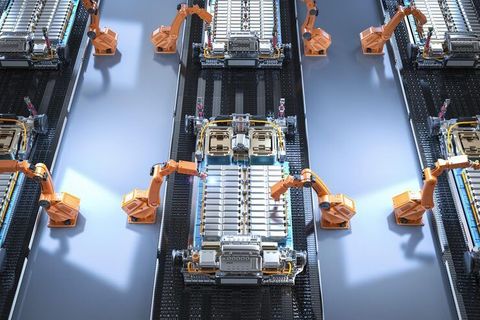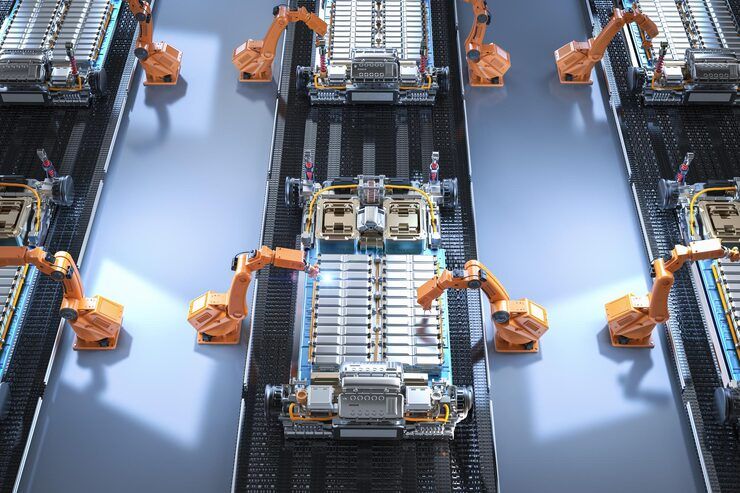
Electric vehicles (EVs) are becoming a central part of modern transportation, driven by the need for cleaner energy and reduced emissions. At the core of every EV is the battery pack, which stores and delivers energy to power the vehicle. The process of assembling these battery packs requires precision, consistency, and safety.
EV battery pack assembly lines are structured production systems designed to assemble battery cells into modules and then into complete battery packs. These assembly lines exist to standardize production, improve quality control, and ensure safety across all stages of manufacturing.
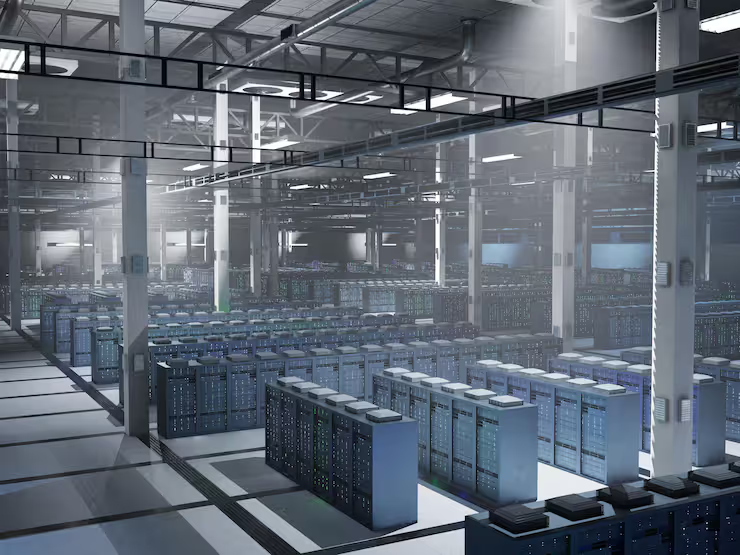
A typical assembly line involves multiple stages such as cell sorting, module assembly, welding, thermal management integration, and final testing. Each stage is designed to ensure that the battery pack performs efficiently and meets safety requirements.
The need for such assembly lines has grown as EV production increases globally. Manual assembly methods are no longer sufficient for maintaining consistency at scale, which is why automated and semi-automated assembly lines are widely used.
Importance
The role of EV battery pack assembly lines has become increasingly important as the demand for electric vehicles continues to rise. These systems help manufacturers maintain control over complex production processes while ensuring high-quality output.
One of the main benefits is improved manufacturing control. Assembly lines use automation and monitoring tools to ensure that each component is placed correctly and functions as intended. This reduces variability and improves reliability.
Safety is another critical factor. Battery packs involve high energy density, which requires careful handling during assembly. Structured assembly lines include safety checks and controlled environments to minimize risks.
These assembly systems impact several stakeholders:
- Automotive manufacturers benefit from consistent production quality
- Engineers and technicians gain better process visibility
- Supply chain managers can track components more efficiently
- Consumers receive safer and more reliable EVs
The following table highlights key differences between manual and automated assembly approaches:
| Feature | Manual Assembly | Automated Assembly Line |
|---|---|---|
| Precision | Variable | High |
| Production Speed | Slower | Faster |
| Quality Consistency | Inconsistent | Standardized |
| Safety Controls | Limited | Advanced |
| Data Tracking | Minimal | Real-time monitoring |
By improving control and reducing errors, assembly lines play a crucial role in scaling EV production effectively.
Recent Updates
The EV industry has seen rapid advancements in battery manufacturing technologies over the past year. These changes have directly influenced how battery pack assembly lines are designed and operated.
In 2025, manufacturers introduced more advanced automation systems, including robotics for precise cell placement and laser welding. These technologies have improved accuracy and reduced production defects.
Another key development is the use of digital twins. This technology creates a virtual model of the assembly line, allowing manufacturers to simulate processes and identify potential issues before actual production begins.
Artificial intelligence has also been integrated into assembly lines. AI systems analyze data from sensors to detect anomalies, predict maintenance needs, and optimize workflows.
Recent trends include:
- Increased adoption of robotic automation in battery assembly
- Integration of AI-driven quality inspection systems
- Use of digital twin technology for process optimization
- Focus on thermal management improvements
These updates reflect a shift toward smarter manufacturing environments where data and automation work together to enhance performance.
Laws or Policies
EV battery pack assembly lines are influenced by various regulations related to safety, environmental impact, and manufacturing standards.
In India, the government has introduced policies to support EV manufacturing and ensure safety compliance. Programs such as the Faster Adoption and Manufacturing of Electric Vehicles (FAME) scheme encourage the development of EV infrastructure and production capabilities.
Battery manufacturing is also subject to safety standards that regulate handling, storage, and transportation of battery components. These standards ensure that assembly processes minimize risks such as overheating or short circuits.
Environmental regulations play a role as well. Manufacturers are required to manage waste materials responsibly and follow guidelines for battery recycling and disposal.
Key policy considerations include:
- Safety standards for battery assembly and testing
- Environmental guidelines for waste management
- Compliance with EV manufacturing regulations
- Quality certification requirements
These regulations help ensure that battery assembly lines operate safely and sustainably.
Tools and Resources
A variety of tools and technologies support EV battery pack assembly lines, helping improve efficiency and control.
Common tools used in the assembly process include:
-
Manufacturing Execution Systems (MES)
Track and manage production processes in real time -
Robotic Assembly Systems
Handle precise tasks such as cell placement and welding -
Battery Management System (BMS) Testing Tools
Ensure proper functioning of battery electronics -
Thermal Imaging Systems
Monitor temperature distribution during assembly -
Quality Inspection Software
Detect defects and ensure compliance with standards
The table below summarizes their roles:
| Tool/Technology | Function | Benefit |
|---|---|---|
| MES | Production tracking | Improved visibility |
| Robotics | Automated assembly tasks | Higher precision |
| BMS Testing Tools | Electrical validation | Enhanced reliability |
| Thermal Imaging | Heat monitoring | Safety assurance |
| Inspection Software | Quality control | Defect reduction |
These tools work together to create a controlled and efficient manufacturing environment.
FAQs
What is an EV battery pack assembly line?
It is a production system used to assemble battery cells into modules and complete battery packs for electric vehicles.
Why is automation important in battery assembly?
Automation improves precision, reduces errors, and ensures consistent quality across all units.
How do assembly lines improve safety?
They include controlled environments, monitoring systems, and safety checks to reduce risks during production.
What role does AI play in battery assembly?
AI helps analyze data, detect defects, and optimize production processes in real time.
Are EV battery assembly lines environmentally regulated?
Yes, they must follow environmental guidelines related to waste management and battery recycling.
Conclusion
EV battery pack assembly lines are a critical component of modern electric vehicle manufacturing. As the demand for EVs continues to grow, the need for efficient, safe, and controlled production processes becomes increasingly important.
These assembly systems help standardize complex manufacturing steps, improve product quality, and ensure safety at every stage. With the integration of advanced technologies such as automation, AI, and digital twins, battery assembly lines are becoming more intelligent and efficient.
Understanding how these systems work provides valuable insight into the future of EV manufacturing and highlights the importance of innovation in building reliable and sustainable transportation solutions.